CPU Scheduling & Parallelism Simulator
What I did
Inspired by turn-taking in Texas Hold’em, I built a Python scheduling simulator and compared threads with processes on a CPU-bound workload.
Operating Systems course project · February–April 2026
My contribution
Student project author and classroom presenter
- Implemented scheduling policies, task metrics, and Gantt-style timelines.
- Built thread and process experiments using CPU-bound Monte Carlo sampling.
- Compared local and cloud observations and presented the interpretation.
Outcome
Implemented FCFS, Round Robin, and Priority scheduling; explored 1, 2, 4, and 8 workers in concurrency experiments.
From poker turns to process scheduling
Texas Hold’em supplied the initial interest: several participants take turns while sharing a limited resource. I abstracted that idea into operating-system tasks and CPU scheduling. The delivered project is a CPU scheduling and parallelism simulator. Its experimental workload is random-number-based Monte Carlo sampling, rather than poker dealing or hand-strength evaluation.
The work has two distinct parts. A discrete simulator calculates scheduling timelines and waiting metrics. Separate Python experiments measure real execution time with threads and processes. Keeping them separate helps explain why an abstract scheduling result and a runtime benchmark answer different questions.
Scheduling policies and metrics
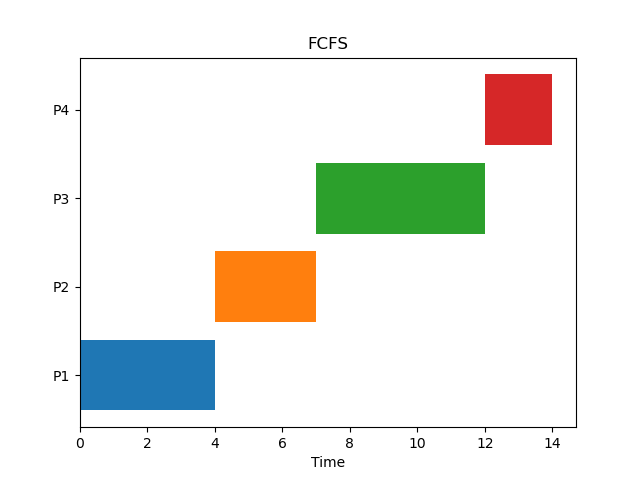
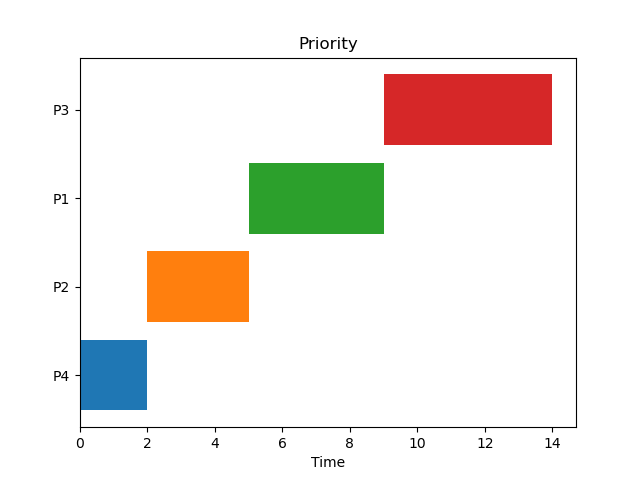
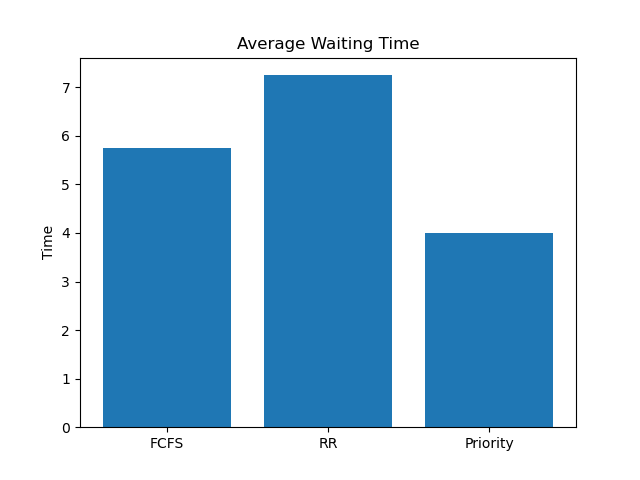
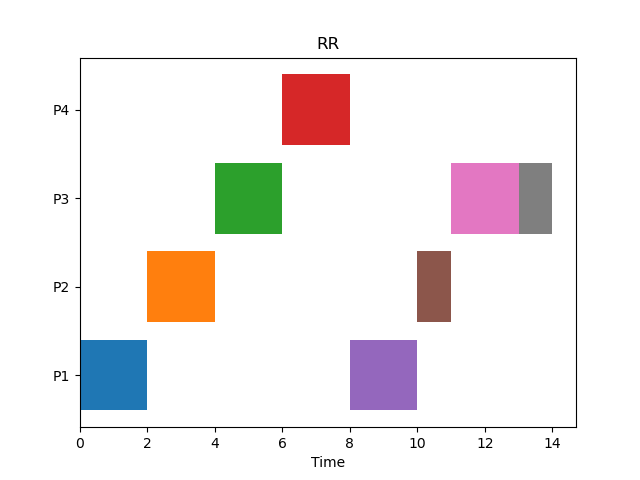
I implemented First Come First Serve, Round Robin with a two-unit time quantum, and non-preemptive Priority scheduling. Each task stores its burst duration, remaining work, priority, and completion time. The simulator exports Gantt-style charts and computes average waiting and turnaround time for a fixed four-task example.
In this implementation all four tasks are available initially. There is no explicit context-switch cost or later arrival stream. Consequently, differences in the simulated waiting metrics come from execution order and time slicing, not measured operating-system switching overhead. A result on these four tasks is not a general ranking of scheduling algorithms.
Threads versus processes
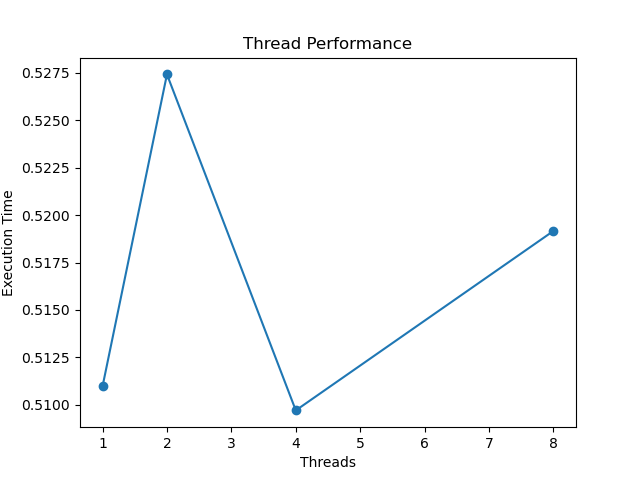
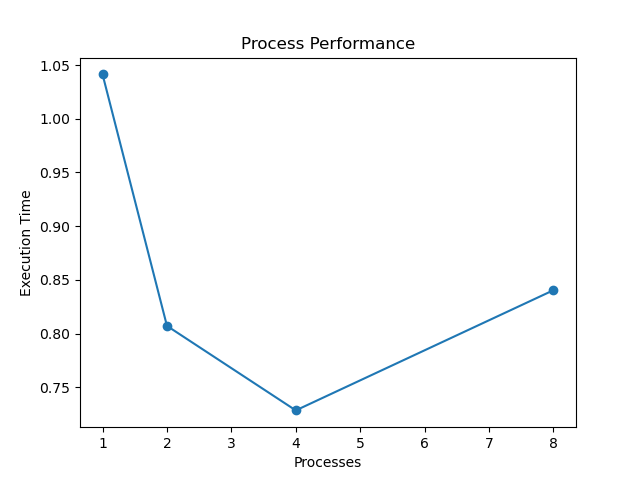
The runtime experiment submits eight Monte Carlo tasks and varies the worker count across 1, 2, 4, and 8. Each task performs a CPU-bound loop using Python random sampling. Threads share a process, whereas multiprocessing uses separate processes.
In the classroom experiment, adding threads did not yield the expected CPU-bound speedup. The presentation also compared local Windows execution with a Google Cloud Linux environment and discussed process overhead and limited VM resources. These observations are specific to that workload, Python setup, and hardware. I do not present a universal speedup factor or treat the archived plots as repeated-trial statistical estimates.
What I learned
The most useful outcome was connecting scheduling concepts to observable behavior while learning to state what each measurement actually represents. The project gave me practice with Python concurrency, experimental comparison, charting, and technical explanation. A stronger benchmark would repeat trials, record CPU allocation and software versions, and distinguish startup cost from steady-state work.
Implementation and evidence boundaries
The supplied code uses ThreadPoolExecutor, multiprocessing.Pool, and eight tasks per worker-count setting. The scheduling model assumes zero arrival times and calculates waiting as completion time minus burst duration. Its time units are abstract. The thread and process charts come from the archived project output; I have not invented missing machine specifications, trial variance, or new runtime measurements.
Code and the original classroom presentation are available on request: contact me.